

Shipping Isn’t the End of Fulfillment
For many operations teams, shipping an order feels like the finish line.
The warehouse has picked and packed the items. Shipping labels have been generated. An Advance Shipping Notice (ASN) has been sent to the retailer, and the customer receives a shipping confirmation with a tracking number.
At first glance, the fulfillment process appears complete.
But in reality, one of the most critical stages is just beginning.
Once a package leaves the warehouse, it enters a part of the fulfillment journey that suppliers often have the least visibility into—and where delays, carrier exceptions, and customer service issues are most likely to occur.
As ecommerce continues to raise expectations for faster delivery and greater transparency, shipment visibility has evolved from a logistics concern into an operational priority.
What Actually Happens After an Order Ships?
Shipping a package is not the same as delivering it.
An ASN simply tells the retailer that an order has been prepared for shipment. It does not confirm that the carrier has picked it up, scanned it, moved it through the network, or delivered it on time.
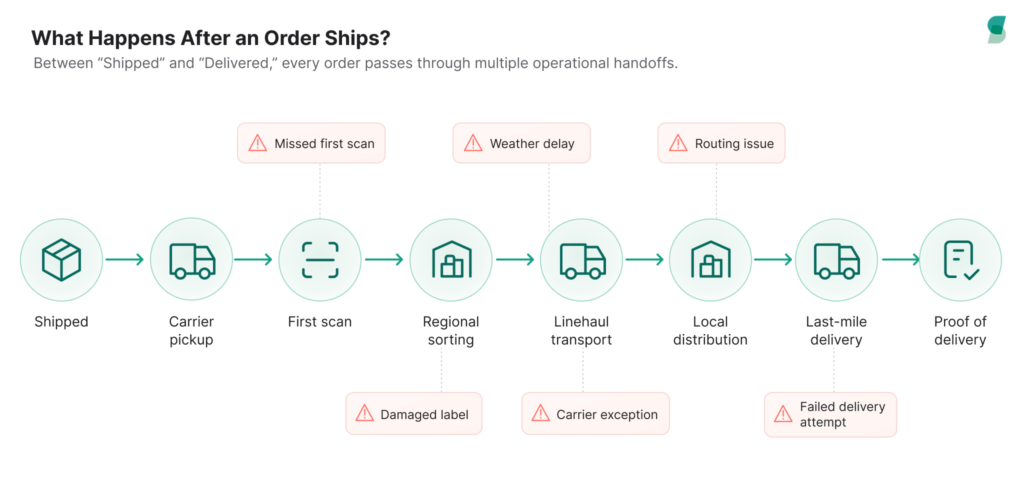
Between “Shipped” and “Delivered,” every order goes through multiple handoffs:
- Carrier pickup
- Initial carrier scan
- Regional sorting
- Linehaul transportation
- Local distribution
- Last-mile delivery
- Proof of delivery
Every handoff introduces new variables.
Packages may miss their first carrier scan. Weather events can delay transportation. Distribution centers become congested during peak seasons. Incorrect addresses, damaged labels, or routing issues can leave shipments sitting idle for days.
None of these issues are visible from the moment an order is marked as shipped.
Unfortunately, they often become visible only after a customer asks, “Where’s my order?”
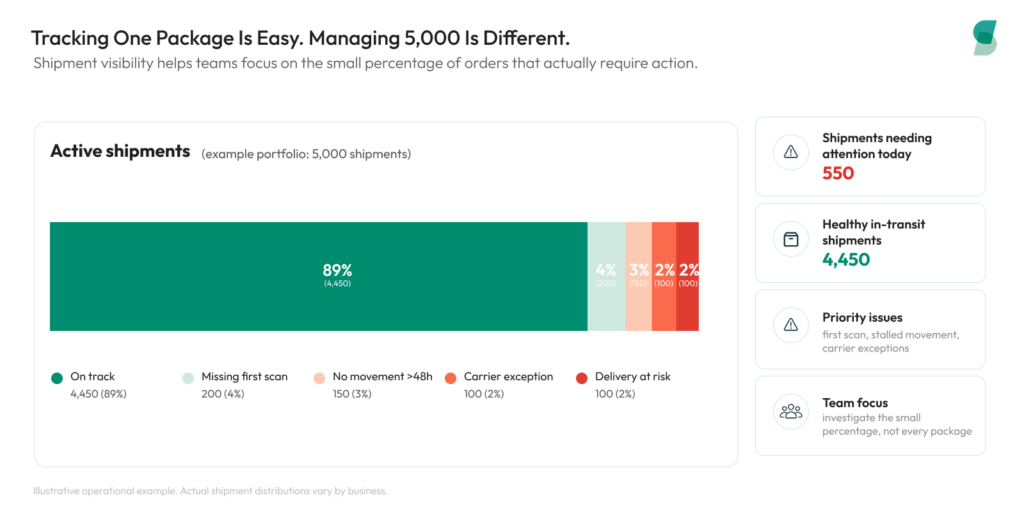
Customers Track One Package. Suppliers Manage Thousands.
Today’s customers expect complete delivery transparency.
They want to know where their order is, when it will arrive, and whether any delays should be expected.
Checking the status of a single package is simple.
Managing thousands of active shipments across multiple retailers, carriers, and warehouses is something entirely different.
Operations teams frequently switch between retailer portals, carrier websites, spreadsheets, and internal systems just to understand what’s happening across their shipments.
The challenge isn’t finding a tracking number.
The challenge is knowing which shipments actually require attention.
As order volume grows, manually checking tracking pages quickly becomes impossible.
Shipment Tracking and Shipment Visibility Are Not the Same Thing
These two terms are often used interchangeably, but they solve different operational problems.
Shipment tracking answers a simple question:
Where is this package?
Shipment visibility helps answer much bigger questions:
- Which shipments haven’t received a carrier scan?
- Which packages have stopped moving?
- Which deliveries have active carrier exceptions?
- Which orders are at risk of missing delivery commitments?
- Which issues require action from my operations team today?
Tracking focuses on an individual shipment.
Visibility focuses on the health of your entire shipping operation.
The difference may seem subtle, but it becomes increasingly important as shipment volume increases.
Why Delivery Exceptions Become Expensive
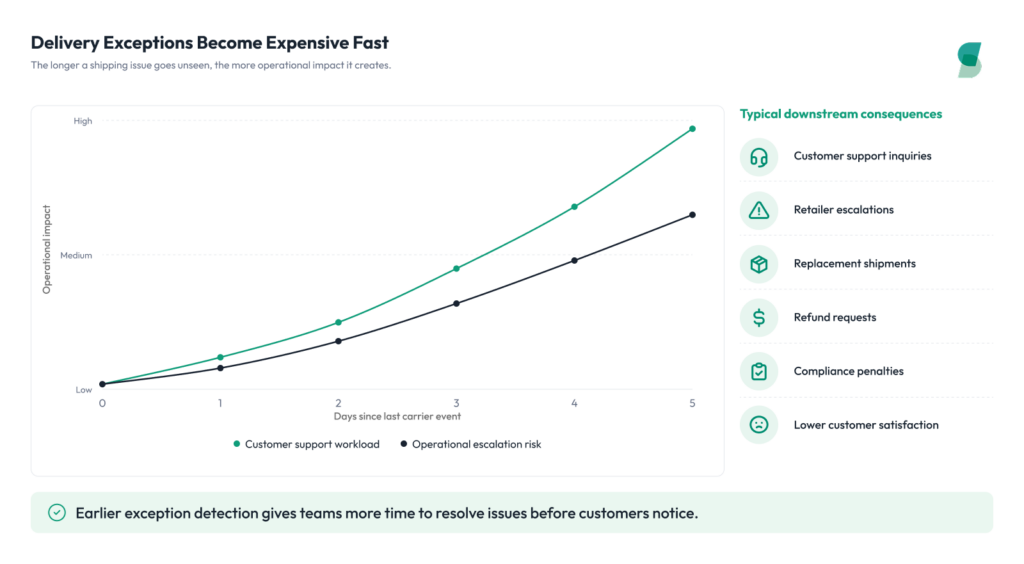
Shipping issues rarely stay isolated.
A delayed package often triggers a chain reaction throughout the business.
It may result in:
- Customer support inquiries
- Retailer escalations
- Replacement shipments
- Refund requests
- Chargebacks or compliance penalties
- Lower supplier performance metrics
- Reduced customer satisfaction
By the time someone reports a missing package, the underlying issue may have existed for several days.
The earlier an operations team identifies shipping exceptions, the more opportunities they have to resolve problems before they affect customers or retailer relationships.
For suppliers selling through retailers such as Amazon, Walmart, Wayfair, Target, or Home Depot, maintaining reliable shipping performance is increasingly important—not only for customer satisfaction, but also for protecting operational scorecards and long-term retail partnerships.
The Goal Isn’t Better Tracking. It’s Better Operational Visibility.
Most suppliers already have access to tracking numbers.
What many still lack is a practical way to understand which shipments need immediate attention.
Operational teams shouldn’t spend their day checking hundreds—or thousands—of tracking pages.
Instead, they need answers to questions like:
- Which shipments have become inactive?
- Which deliveries are experiencing carrier exceptions?
- Which packages were never scanned?
- Which issues have already been assigned?
- Which shipments still require investigation?
That’s the difference between collecting shipment data and turning shipment data into operational intelligence.
As ecommerce operations continue to scale, success depends less on knowing where every package is and more on quickly identifying the small percentage of shipments that require intervention.
Looking Ahead
Shipment visibility is no longer simply about giving customers a tracking number.
It’s about giving operations teams the information they need to identify delivery risks early, respond faster, and keep fulfillment running smoothly after orders leave the warehouse.
In the next article, we’ll explore how leading suppliers monitor thousands of active shipments across multiple carriers—and why effective shipment visibility requires far more than a tracking page.
Continue the Conversation
Shipment visibility doesn’t start with better tracking pages—it starts with better operational processes.
In the next article, we’ll explore how leading suppliers monitor thousands of shipments across multiple retailers and carriers, identify delivery exceptions before customers notice them, and build more proactive fulfillment operations.
If you’re evaluating ways to improve post-shipment visibility across your business, Synctify helps suppliers centralize shipment monitoring, manage delivery exceptions, and gain actionable visibility after orders leave the warehouse.
👉 Contact our team to explore how Synctify’s Shipment Tracking solution can help your team gain greater shipment visibility and build a more proactive fulfillment operation.
Key Takeaways
- Shipping an order doesn’t mean the fulfillment process is complete.
- Shipment visibility helps operations teams monitor what happens after orders leave the warehouse.
- Shipment tracking and shipment visibility solve different operational challenges.
- Early detection of delivery exceptions helps reduce customer inquiries, retailer escalations, and fulfillment risks.
- Modern suppliers are shifting from reactive shipment tracking to proactive shipment visibility.
FAQ
blog-what-happens-after-an-order-ships
Shipment visibility helps businesses identify shipping delays, carrier exceptions, and delivery risks before they impact customers, allowing operations teams to respond proactively instead of reacting to support tickets.
No. Shipment tracking focuses on the status of an individual package, while shipment visibility provides an operational view across all active shipments to help teams prioritize issues and manage fulfillment at scale.
After an order ships, it moves through multiple transportation stages, including carrier pickup, first scan, transit, local delivery, and proof of delivery. Shipment visibility helps operations teams monitor this entire process.
Shipment visibility is particularly valuable for ecommerce suppliers, retailers, distributors, and 3PL providers that manage large shipment volumes across multiple carriers.
Subscribe to Our Newsletter
Get the latest releases, news and more!