

This week, the U.S. online retail market is seeing a rare concentration of major deal events.
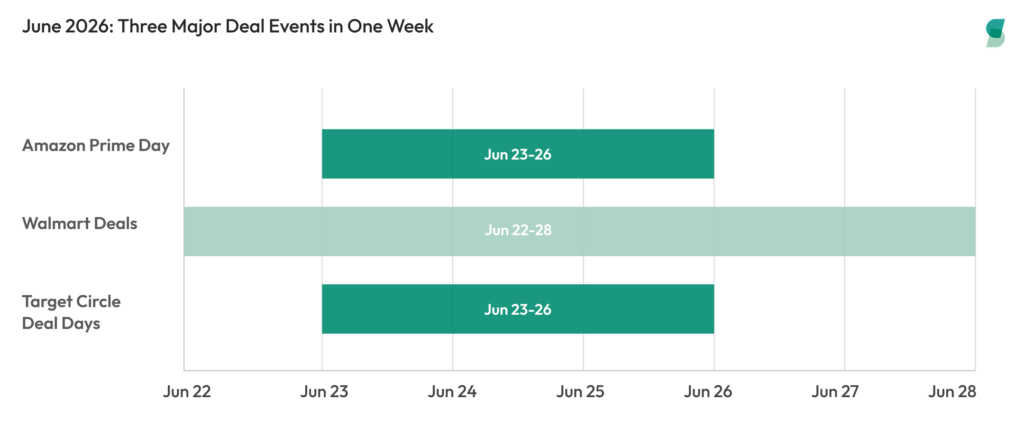
Amazon Prime Day is running from June 23 to June 26. Walmart Deals runs from June 22 to June 28. Target Circle Deal Days is also taking place from June 23 to June 26.
For shoppers, this creates a week of cross-platform deal hunting. For suppliers, brands, and ecommerce sellers, it creates something more complex: a real-time test of backend operational readiness.
When major retail platforms run promotional events during the same week, the pressure is not only on pricing and marketing. It is also on inventory allocation, order processing, fulfillment speed, platform updates, and multi-channel coordination.
In other words, June’s retail battleground is not only happening on the front end. It is also happening behind the scenes.
What Is Happening During June’s Major Retail Deal Week?
Amazon, Walmart, and Target are all running major promotional events during the same week in June 2026.
Amazon Prime Day runs from June 23 to June 26. Walmart Deals runs from June 22 to June 28. Target Circle Deal Days runs from June 23 to June 26.
This overlap makes June a highly competitive shopping window for U.S. online retail. It also creates a more demanding operating environment for suppliers selling across multiple retail channels.
Instead of preparing for one marketplace event, suppliers now need to manage simultaneous sales activity across several major platforms.
From Prime Day Preparation to Multi-Platform Promotion Management
For years, summer deal planning often started with Amazon Prime Day. Brands reviewed their Amazon listings, checked inventory, planned ad budgets, and prepared fulfillment workflows for a spike in demand.
That playbook is no longer enough.
With Walmart and Target running major deal events at nearly the same time, suppliers are not preparing for one marketplace moment. They are preparing for several demand spikes at once.
The question is no longer just, “Are we ready for Prime Day?”
It is now, “Are we ready to manage promotions, inventory, orders, and fulfillment across Amazon, Walmart, Target, and other channels during the same week?”
That shift matters because multi-platform selling creates both opportunity and complexity. More channels can mean more revenue, but they also require better coordination across product data, inventory availability, order status, shipping updates, and platform-specific workflows.
Why Does Multi-Platform Retail Create Operational Pressure?
Multi-platform retail creates operational pressure because every platform has its own requirements for product data, inventory updates, order routing, shipping confirmations, documents, invoices, and returns.
A supplier may sell the same products across Amazon, Walmart, Target, Lowe’s, Wayfair, Home Depot, Macy’s, Costco, Best Buy, and its own ecommerce site. Each channel may require a different workflow.
During a normal week, manual work may appear manageable. During a major deal week, order volume can increase quickly, and small process gaps can become costly.
This is why backend readiness matters. Suppliers need to know whether their systems can support higher volume, faster order movement, and accurate platform updates across every channel.
| Manual Multi-Platform Operations | With Synctify Integration |
| High risk of overselling and delayed updates across multiple channels. | Real-time inventory synchronization protects revenue and prevents overselling. |
| Portal-by-portal downloads and manual data entry processes. | Centralized, automated order routing directly to ERP or WMS. |
| Manual tracking updates and complex, inconsistent shipping code mapping. | Automated marketplace synchronization with standardized shipping codes. |
| Fragile workflows that break down during high-volume deal weeks. | Highly scalable infrastructure built to handle multi-platform demand spikes. |
| High risk of human error in document and platform-specific requirements. | Automated workflows minimize errors and ensure 100% platform compliance. |
Inventory Accuracy Becomes a Revenue Protection Function
Inventory is one of the biggest challenges during a major promotional event.
The same product may be selling across Amazon, Walmart, Target, and other retail channels at the same time. If inventory is not updated accurately, one platform may continue accepting orders after available stock has already been committed elsewhere.
That can lead to overselling, cancellations, delayed shipments, and a poor customer experience.
At the same time, being too conservative with inventory allocation can cause suppliers to miss valuable demand during a major promotional window.
This is why inventory synchronization is no longer just a back-office task. During a major deal week, accurate inventory becomes a revenue protection function.
On a normal day, a delayed inventory update may be manageable. During a sales spike, the same delay can quickly become an operational problem.
Order Processing Speed Is Now Part of the Customer Experience
Inventory is only one part of the challenge. Order processing speed is just as important.
Customers see the front-end experience: a deal, a checkout page, and an estimated delivery date. Behind that experience, suppliers need to receive orders, update inventory, route orders to the right warehouse or ERP, generate shipping information, confirm fulfillment, and send status updates back to each platform.
For retail and 1P workflows, suppliers may also need to manage documents and requirements such as advance ship notices, invoices, routing requests, packing details, and other platform-specific processes.
If these workflows depend on spreadsheets, manual exports, and portal-by-portal updates, they become harder to scale when order volume increases.
During a major deal week, the challenge is not just getting more orders. The challenge is processing more orders accurately, quickly, and consistently.
Strong Retail Demand Is Making Promotional Calendars More Crowded
This concentrated deal week is also happening in a retail environment that still shows consumer demand.
According to the U.S. Census Bureau, U.S. retail and food services sales reached $763.7 billion in May 2026, up 0.9% from the previous month and 6.9% from May 2025. Total sales from March through May 2026 were up 5.3% from the same period a year earlier.
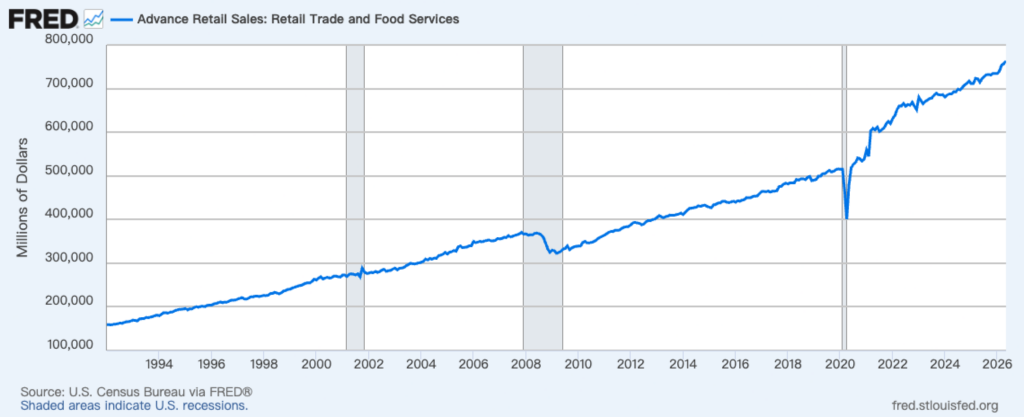
That gives major retailers a clear reason to compete aggressively for consumer spending before the full back-to-school and holiday shopping cycles begin.
For suppliers, this suggests that promotional calendars may continue to become more crowded. Prime Day, Walmart Deals, Target Circle Deal Days, back-to-school, Labor Day, Black Friday, Cyber Monday, and holiday campaigns are no longer isolated events. They are becoming part of a longer and more continuous retail calendar.
When promotions become more frequent and more overlapping, manual workarounds become less sustainable.
Multi-Platform Retail Operations Cannot Depend on Manual Work Forever
For growing suppliers and ecommerce sellers, multi-platform retail is now part of the growth path.
At the early stage, teams may be able to manage these workflows manually. They log into different portals, download orders, update inventory, prepare spreadsheets, and send fulfillment updates back to each platform.
But as channel count, order volume, and promotion frequency increase, manual operations become fragile.
The biggest risk is not only that manual work is slow. It is that it is inconsistent.
Data may be entered twice. Orders may be missed. Inventory may not update on time. Fulfillment status may not be sent back correctly. These issues may seem manageable during normal periods, but they can quickly become serious during a promotional spike.
How Synctify Supports Multi-Platform Retail Operations
Synctify helps suppliers and brands build the backend operational foundation needed for multi-platform retail growth.
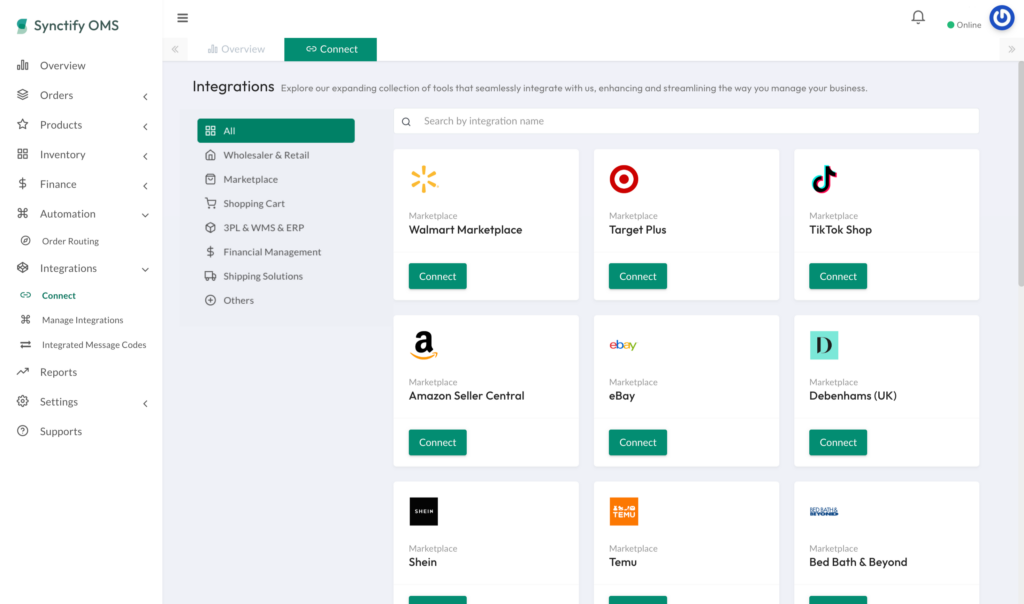
Instead of managing each retail channel separately, Synctify helps teams centralize order processing, synchronize inventory, connect with backend systems such as ERP or NetSuite, and support platform-specific workflows across retailers and marketplaces.
For suppliers selling across Amazon, Walmart, Target, and other retail channels, this can reduce manual work, improve inventory visibility, and make order processing more consistent.
That value becomes especially important during promotional peaks, when timing, accuracy, and system reliability matter most.
Synctify is not just about preparing for one sales event. It helps suppliers operate more efficiently across multiple retail channels as promotional cycles become more frequent, more competitive, and more operationally demanding.
The Front-End Deal Battle Depends on Back-End Readiness
Amazon, Walmart, and Target may be competing for shoppers with major June deal events. But for suppliers, the real test is happening behind the scenes.
Can inventory stay accurate across channels? Can orders be processed quickly? Can fulfillment updates be sent back on time? Can teams handle a sales spike without relying on manual workarounds?
These are the questions that will define success in a more competitive U.S. retail environment.
June’s deal week shows where online retail is heading. Growth will not come from adding more channels alone. It will come from building the operational systems needed to manage those channels at scale.
In a multi-platform retail market, backend readiness is becoming a competitive advantage.
FAQ
blog-amazon-walmart-and-target-june-deal-week
Subscribe to Our Newsletter
Get the latest releases, news and more!