
When an ecommerce order cannot ship, the problem is not always inventory, the warehouse, or the carrier.
In many fulfillment operations, orders get delayed because different systems use different shipping codes to describe the same carrier or delivery service. The order data may have been sent successfully, but the receiving system may not understand what the shipping method means.
This is where shipping code mapping becomes important.
Shipping code mapping is the process of connecting different carrier codes, service levels, and shipping method names across marketplaces, order management systems, warehouses, 3PLs, and carriers. It helps each system understand the same fulfillment instruction, even when the code format is different.
For ecommerce sellers and retail suppliers, this is not just a technical detail. It directly affects order fulfillment, warehouse execution, marketplace compliance, shipment updates, and customer experience.
The common fulfillment problem sellers often overlook
Most teams start troubleshooting a stuck order by checking the obvious issues:
- Is the item in stock?
- Is the shipping address valid?
- Did the order sync successfully?
- Did the warehouse receive the order?
- Did the 3PL process it?
These checks are important. But they do not always explain why an order fails to move forward.
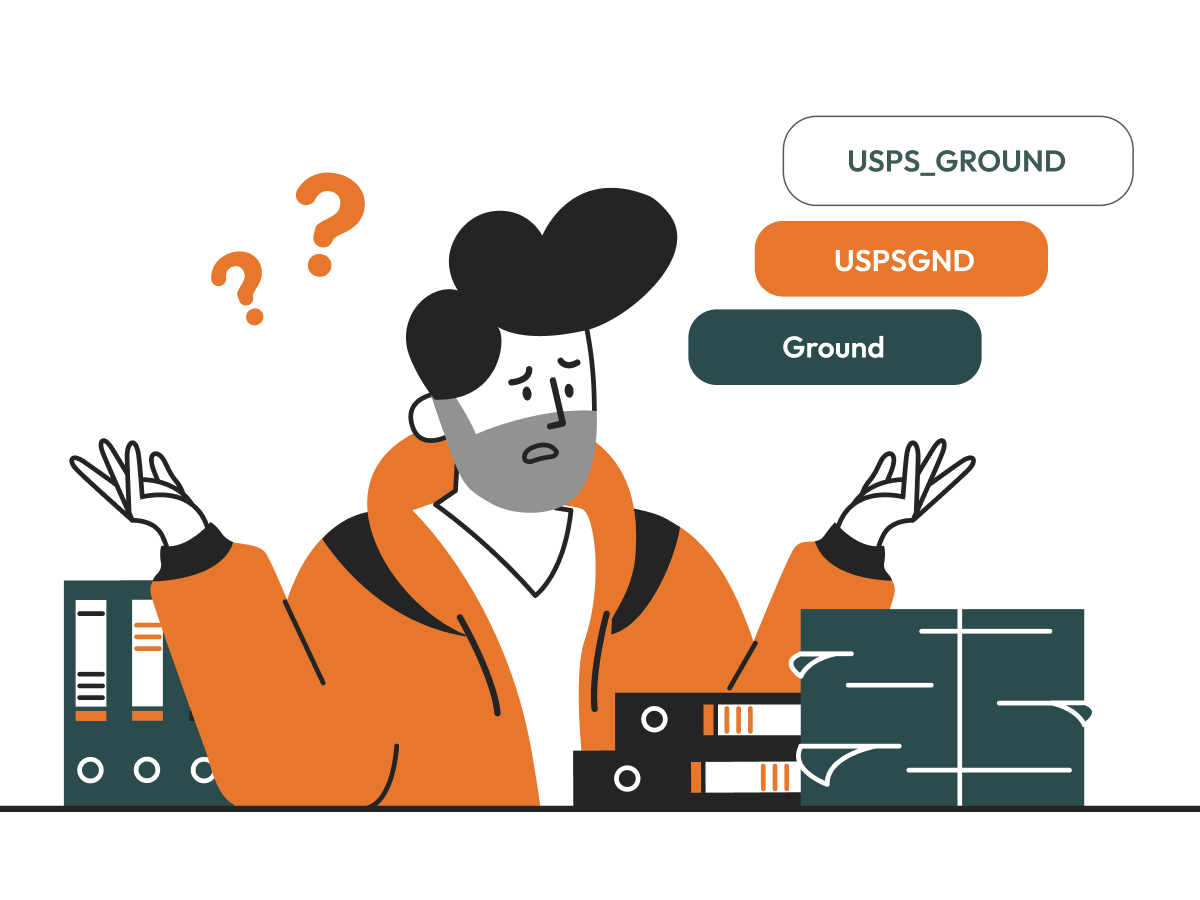
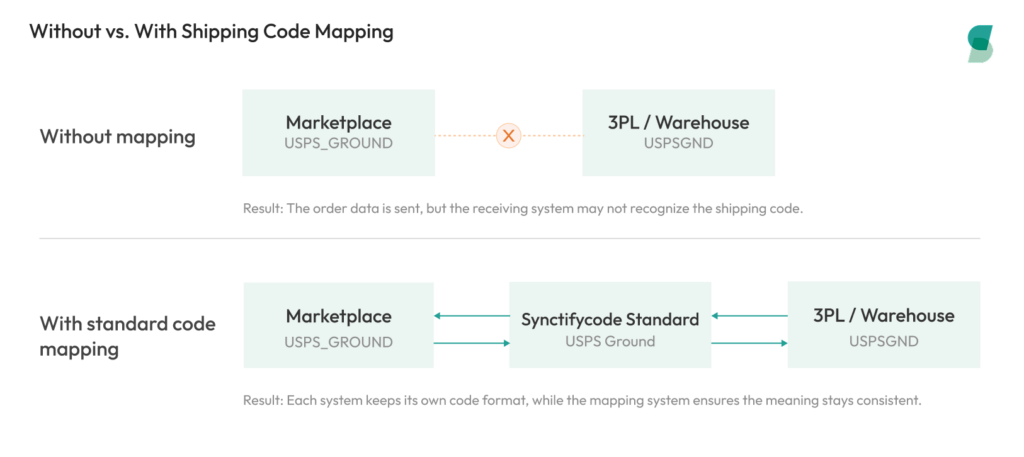
A marketplace may send a shipping method as USPS_GROUND, while a warehouse or 3PL expects USPSGND. To a human operator, both codes may clearly refer to USPS Ground. To a software system, however, they may be completely different values.
As a result, the order may arrive at the warehouse with inventory available and a valid address, but the shipment still cannot be created. In other cases, the shipment may be created, but the marketplace may reject the shipment update because the carrier or service level does not match its required format.
The issue is not that the order was not sent. The issue is that the order was not understood.
What is shipping code mapping?
Shipping code mapping is the process of matching different shipping-related codes across systems so they can refer to the same fulfillment meaning.
For example, one delivery service may appear differently across systems:
| System | Example shipping code |
| Marketplace | USPS_GROUND |
| Order management system | USPS Ground |
| 3PL or warehouse system | USPSGND |
| Carrier catalog | Ground |
These values may all describe the same shipping service, but systems need a defined mapping to treat them as equivalent.
Without shipping code mapping, ecommerce systems may pass data back and forth successfully while still failing to execute the correct fulfillment action.
Why do ecommerce systems use different shipping codes?
Ecommerce fulfillment involves many systems, and each one may have its own naming conventions, data format, or compliance requirements.
A single order may move through:
- A marketplace or sales channel
- An order management system
- A warehouse management system
- A 3PL platform
- A carrier system
- A shipment confirmation or tracking update sent back to the marketplace
Each system may describe the same carrier or service level in a different way. A marketplace may use a platform-specific shipping method. A warehouse may use an internal abbreviation. A 3PL may require a specific service code. A carrier catalog may use a shorter service name.
These differences are normal in a multi-channel ecommerce environment. The operational risk appears when those differences are not managed consistently.
Carrier code vs. service level: what is the difference?
Two shipping data fields are especially important in ecommerce fulfillment: carrier code and service level.
A carrier code identifies the company responsible for delivering the package. Examples include USPS, UPS, FedEx, DHL, or regional carriers.
A service level identifies the delivery service used by that carrier. Examples include Ground, 2-Day, Overnight, Express, Standard, or Economy.
Together, carrier code and service level tell the fulfillment system how the package should be shipped.
These values can determine:
- Which carrier account the warehouse should use
- Which shipping service the 3PL should select
- Whether a shipping label can be generated automatically
- Whether a marketplace will accept the shipment update
- What tracking and delivery information the customer sees
- Whether the seller meets marketplace shipping requirements
Carrier codes and service levels are not just labels. They are fulfillment instructions.
Why shipping code errors cause fulfillment delays
Shipping code errors can interrupt fulfillment at several points.
A warehouse may not recognize the requested shipping method.
A 3PL may pause the order for manual review.
A carrier label may fail to generate.
A marketplace may reject the shipment update.
A customer may not receive accurate tracking information.
These issues can be difficult to diagnose because the order may look normal at first. The order may sync successfully. The warehouse may receive it. The address and inventory may be correct.
The error often appears later, when another system tries to act on the shipping data.
This delay makes shipping code issues costly. By the time the problem is found, the order may already be late, customer support may already be involved, or the marketplace may have flagged the shipment.
Why manual fixes do not scale
When order volume is low, operations teams may rely on manual knowledge.
Someone may remember that USPS_GROUND, USPSGND, and Ground all refer to the same service. They may correct the order manually or ask the warehouse to process it as an exception.
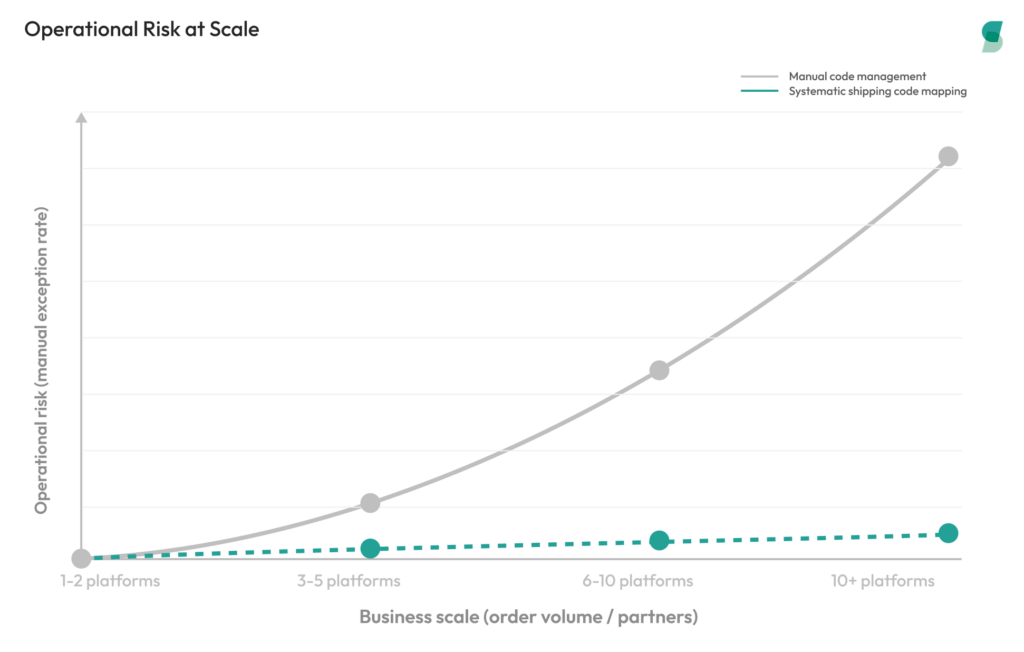
This approach may work for a small number of orders, but it becomes risky as the business grows.
As ecommerce operations scale, sellers often add:
- More marketplaces
- More warehouses
- More 3PL partners
- More carrier services
- More regional shipping rules
- More marketplace compliance requirements
Each new partner may introduce new shipping codes, new formatting rules, and new fulfillment expectations.
At that point, manual interpretation creates operational risk. It increases the chance of inconsistent shipping decisions, delayed orders, failed shipment updates, and repeated support work.
Order transmission is not the same as order understanding
A successful integration does not only send data from one system to another. It also makes sure the receiving system can interpret and act on that data correctly.
In fulfillment, this requires three layers of translation:
- Understand the source system’s shipping code
- The system needs to know what a marketplace or sales channel means when it sends a shipping method.
- Convert it into an internal fulfillment standard
- The business needs a consistent way to represent carrier and service level information internally.
- Send the correct code to the destination system
- The warehouse, 3PL, carrier, or marketplace may each require a different code format.
This is why modern ecommerce fulfillment systems often need both integration and translation. The goal is not only to move the order, but to preserve its meaning across every step of the fulfillment process.
What a reliable fulfillment system should manage
A reliable fulfillment system should help sellers manage shipping code relationships across platforms, warehouses, 3PLs, and carriers.
At a minimum, it should help answer questions such as:
- What does this marketplace shipping method mean?
- Which carrier and service level should it map to?
- What code does the warehouse need to receive?
- Does the 3PL use a different code for the same service?
- What value does the marketplace require in the shipment update?
- Which shipping codes are already mapped?
- Which shipping codes are unmapped and need attention?
- Did the actual shipment match the expected shipping method?
These questions may sound operational, but they are also data quality questions. When shipping data is mapped clearly, orders are easier to route, warehouses are less likely to pause fulfillment, and marketplaces are more likely to accept shipment updates.
Why this matters for ecommerce sellers and retail suppliers
For ecommerce sellers, shipping code mapping affects more than backend configuration. It affects fulfillment stability.
Poorly managed shipping codes can lead to:
- Delayed shipments
- More manual warehouse communication
- More customer support tickets
- Failed tracking updates
- Marketplace compliance issues
- Higher operational overhead
- Slower onboarding of new warehouses or 3PLs
Well-managed shipping code mapping helps sellers build fulfillment operations that can scale across more channels, more partners, and more order volume.
This is especially important for brands, marketplace sellers, and retail suppliers that operate across complex fulfillment networks. As the number of systems grows, consistency becomes harder to maintain manually and more important to manage systematically.
Conclusion: the small codes behind reliable ecommerce fulfillment
Customers rarely think about carrier codes, service levels, shipping method mapping, or shipment update formats. They only see whether their order ships on time and whether the tracking information is accurate.
But behind that customer experience is a chain of systems that must all understand the same order in the same way.
When an order cannot ship, the issue may not be inventory. It may not be the warehouse. It may not even be whether the order was transmitted successfully.
Sometimes, the order has arrived exactly where it should be.
The problem is that the next system does not understand what it means.
For growing ecommerce businesses, managing shipping code mapping is one of the small but important foundations of reliable fulfillment.
FAQ
blog-shipping-code-mapping
Subscribe to Our Newsletter
Get the latest releases, news and more!